The “Mathematical Certainty” Solution: Why Your Asheville Floodplain Project Doesn’t Need a Miracle—It Needs Subtraction.

If you are a developer looking at the River Arts District or the Swannanoa corridor, you’ve probably been warned about the HEC-RAS nightmare.

The conventional wisdom says you have to download an outdated FEMA model, try to account for a decade of “data drift” and recent storm shifts, and then pray your project shows a “0.00-foot rise” in the flood elevation. It’s expensive, it’s time-consuming, and because the baseline data is often “fractured” by recent development, it’s rarely 100% accurate.

At XYZ Civil, we take a different approach. We don’t try to “engineer around” a bad model. We use the Mathematical Certainty of Net-Negative Impact.

The Logic of the Net-Negative Site

In Asheville, the goal is a No-Rise Certification. Most firms try to achieve this by building exactly as much as they mitigate—a “break-even” math problem.

But what if you didn’t just break even? What if you took an existing site—perhaps a 1950s-era unvented masonry warehouse or a lot filled with legacy debris—and you subtracted more obstruction than you added?

Commercial Site Development Plan Requirements in Western North Carolina

Commercial site development requirements in Western North Carolina vary by county and municipality, even for similar project types. While most jurisdictions require the same core elements — site layout, grading, drainage, access, utilities, and zoning compliance — the level of detail and review focus differs significantly.

Below is an overview of common commercial site development plan requirements in frequently requested WNC jurisdictions, including Asheville, Buncombe County, Haywood County, Waynesville, and Black Mountain.


City of Asheville

Commercial development within Asheville typically requires formal Site Plan Review prior to building permit issuance. Reviews are generally more detailed than surrounding areas and often emphasize urban context, pedestrian access, and site constraints.

Typical requirements include:

  • Professionally prepared site plan
  • Zoning compliance (use, setbacks, height, parking)
  • Grading and drainage design for steep or constrained sites
  • Stormwater management and erosion control
  • Pedestrian circulation and ADA access
  • Landscaping, buffering, and exterior lighting
  • Utility coordination and availability

Asheville projects frequently involve limited access, steep slopes, and tighter dimensional standards, making early site planning critical.
Concrete Plant Civil Engineering & SDP Plans

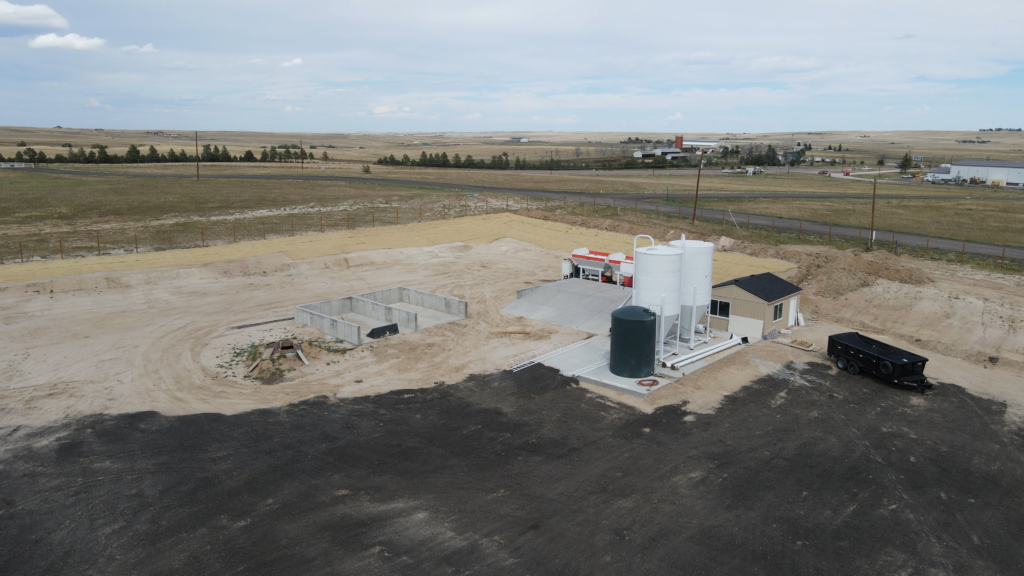
Apline Ready Mix is a concrete batch plant that is currently under construction in Elbert County, Colorado. The site area is 5 acres and the site is located in the 6 Arrow East Commercial Subdivision near Kiowa.

XYZ Civil, LLC did the civil engineering and Site Development Plan submittal documents for this project, which is an EDZ zoned lot and required county commissioner approval.

Stormwater management system was designed to collect runoff into a detention pond via swales and berms. The pond stores and treats the runoff before slowly discharging it downstream.

SUDP Permit Denver

Sewer Use and Drainage Permit (SUDP) causes a lot of frustration for many homebuilders working in the City of Denver.

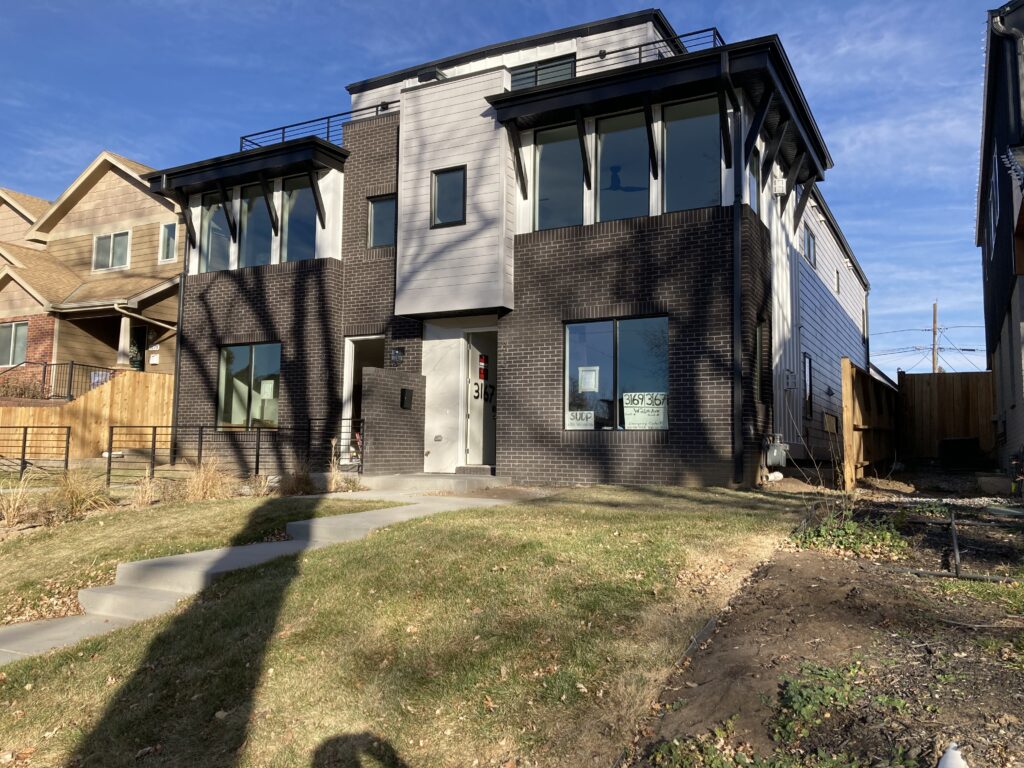
Duplex in Denver with full 10′ basement

Main Things to Consider

  • Denver area groundwater elevation is typically between 8-12′ below surface. However, with zoning laws limiting houses to 2.5 stories on a tiny lot, most people want a full basement in addition to the 2.5 stories.
  • Denver homes with a basement should have a sump pump, even if no groundwater is present. The sump pump should be connected to foundation drains and daylighted in a controlled manner to a drywell. If the projected flow is minimal (<0.5 cubic feet/second, cfs), you may discharge groundwater to the local storm sewer system.

DESC & GESC Permits in Douglas County, Colorado

Douglas County requires a DESC (Drainage, Erosion, & Sediment Control) Plan at the very least for basically any freestanding structure which needs a permit, including barns, garages, ADU’s, and additions for houses.

Typically these types of structures have less than 1 acre of disturbance and so a DESC is typically required.

New SFR in Sedalia, Douglas County, CO required a DESC plan and the 1 mile access road required engineering and culverts.

However, if you plan to disturb over 1.0 acre of land in Douglas County, than you need a GESC (Grading, Erosion, & Sediment Control) Plan. A GESC is a lot like a DESC but is more detailed and has more requirements.

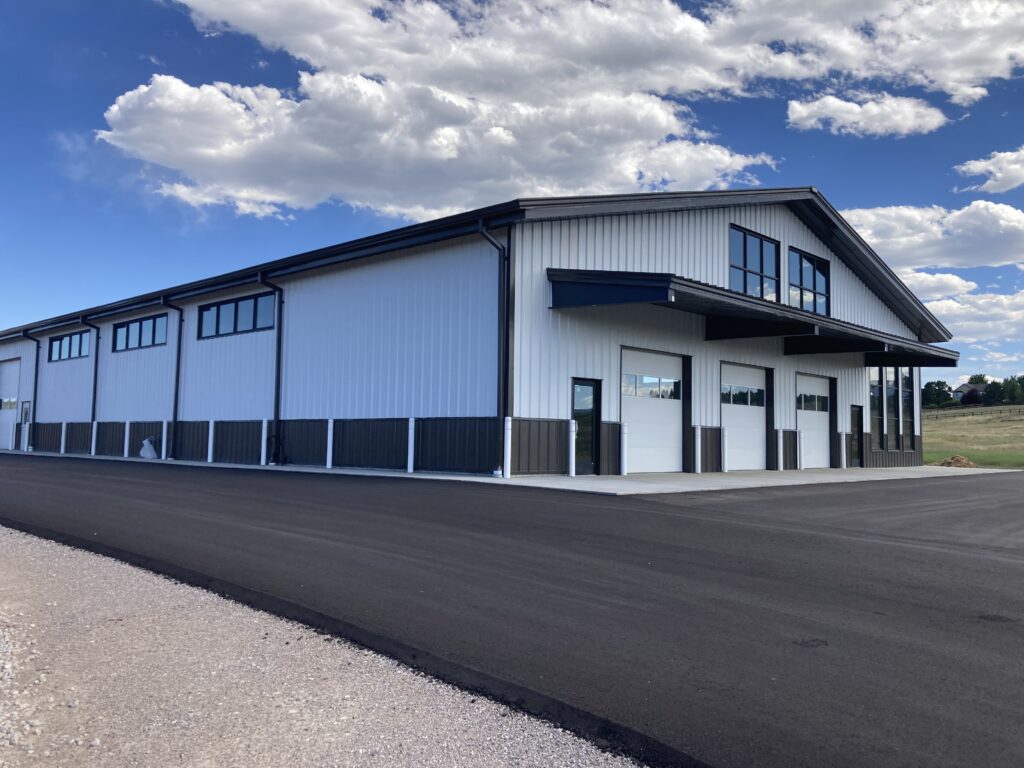
Large steel accessory building in Douglas County required a DESC plan